
Anúncios
We are witnessing a gradual unraveling of systems we once considered permanent, yet most remain oblivious to the transformation silently reshaping our existence.
🌐 The Invisible Architecture Crumbling Beneath Our Feet
Modern civilization rests upon intricate networks of infrastructure, social contracts, and economic agreements that most people never consciously acknowledge. These foundational systems—from supply chains to social trust, from information ecosystems to environmental stability—are experiencing what experts increasingly describe as a “silent collapse.” Unlike dramatic catastrophes that demand immediate attention, this descent operates gradually, almost imperceptibly, yet its cumulative impact may prove far more consequential than any single disaster.
Anúncios
The silent collapse doesn’t announce itself with sirens or breaking news alerts. Instead, it manifests in subtle ways: slightly longer wait times for essential services, incremental price increases that seem individually insignificant, marginally reduced quality in products we’ve trusted for years, and a vague sense that things aren’t quite working as smoothly as they once did. These micro-disruptions accumulate beneath our awareness threshold, creating a new normal that would have seemed dysfunctional just a decade ago.
Understanding this phenomenon requires us to examine multiple dimensions simultaneously—economic resilience, social cohesion, environmental sustainability, technological dependency, and institutional credibility. Each domain tells part of a larger story about systems stretched beyond their sustainable limits, operating on borrowed time and depleted reserves.
Anúncios
📉 Economic Fragility Behind the Facade of Stability
The global economy presents a paradoxical picture: stock markets reaching record highs while fundamental indicators suggest deepening vulnerability. This disconnect between financial performance and underlying economic health exemplifies the silent collapse perfectly. Wealth concentration has reached levels not seen since the 1920s, yet this reality remains obscured by complex financial instruments and statistical manipulations that paint a rosier picture than most citizens experience.
Middle-class purchasing power has steadily eroded across developed nations, though the decline manifests differently than previous economic contractions. Rather than sudden unemployment spikes, we see underemployment, gig economy proliferation, and the normalization of multiple income streams as necessary for basic stability. The traditional economic ladder—where hard work reliably led to incremental advancement—has been quietly dismantled, rung by rung.
Supply chain fragility has become painfully evident in recent years, yet the structural vulnerabilities extend far beyond temporary disruptions. Just-in-time manufacturing, global interdependence, and optimization for efficiency rather than resilience have created systems that function brilliantly under ideal conditions but collapse rapidly when stressed. The redundancy and slack that once provided buffering capacity have been systematically eliminated in pursuit of quarterly profit maximization.
The Debt Time Bomb Ticking Quietly
Global debt levels have reached unprecedented proportions, with combined government, corporate, and household obligations exceeding $300 trillion worldwide. This represents more than three times global GDP—a ratio that would have been considered economically catastrophic in previous generations. Yet because this accumulation happened gradually over decades, normalized by policy decisions and cultural shifts, the magnitude of the obligation rarely sparks the alarm it statistically warrants.
Central banks have painted themselves into a corner, unable to raise interest rates to historical norms without triggering cascading defaults, yet also unable to maintain indefinite monetary stimulus without currency devaluation and inflation. This policy paralysis represents a form of silent collapse—the gradual erosion of monetary authority and economic policy effectiveness that happens too slowly to generate crisis-level attention but fundamentally undermines long-term stability.
🏛️ The Erosion of Institutional Trust and Social Cohesion
Perhaps no dimension of the silent collapse proves more consequential than the deterioration of social trust and institutional credibility. Surveys consistently show declining confidence in government, media, educational systems, religious institutions, corporations, and even science itself. This isn’t merely cynicism or generational attitude shifts—it represents a fundamental breakdown in the mechanisms that allow complex societies to function.
Social cohesion depends on shared narratives, common understanding of facts, and belief in procedural fairness. When these elements erode, societies fragment into competing reality bubbles, each with its own information ecosystem, moral framework, and understanding of basic facts. The capacity for collective action—essential for addressing large-scale challenges—diminishes proportionally to this fragmentation.
Political polarization has intensified to levels that make compromise increasingly difficult and governance less effective. Rather than disagreeing about solutions to commonly acknowledged problems, opposing factions can’t even agree on what constitutes reality, what problems exist, or which authorities should be trusted to assess evidence. This epistemic collapse undermines democracy’s foundational assumption that informed citizens can engage in reasoned deliberation.
The Information Ecosystem’s Quiet Degradation
The digital revolution promised democratized knowledge and enhanced connectivity, yet it has simultaneously enabled unprecedented manipulation, misinformation proliferation, and attention fragmentation. The business models underpinning most digital platforms optimize for engagement rather than truth, accuracy, or social benefit—creating perverse incentives that systematically degrade information quality.
Traditional gatekeepers who once filtered information—however imperfectly—have been largely dismantled without adequate replacement mechanisms. The result isn’t liberated knowledge but rather information chaos where truth competes on equal footing with fabrication, and expertise carries no more weight than confident assertion. This epistemic environment makes collective sense-making nearly impossible, paralyzing society’s ability to identify and address emerging challenges.
🌍 Environmental Degradation Beyond Climate Headlines
Climate change dominates environmental discourse, yet numerous other ecological systems are silently collapsing with potentially catastrophic implications. Topsoil depletion, aquifer exhaustion, insect population collapse, ocean acidification, microplastic saturation, and biodiversity loss each represent slow-motion catastrophes that receive minimal public attention relative to their potential impact.
Topsoil—the thin layer of fertile earth upon which agriculture depends—is eroding at rates far exceeding natural replenishment. Current practices suggest many agricultural regions have only 60-80 harvests remaining before productivity collapses. Yet this timeline extends far enough into the future that political systems designed for short-term thinking struggle to prioritize the issue.
Groundwater aquifers supplying drinking water and irrigation for billions are being depleted faster than rainfall can recharge them. The Ogallala Aquifer beneath America’s Great Plains, the North China Plain aquifer, and numerous systems in India and the Middle East face exhaustion within decades. Unlike climate change, aquifer depletion offers no realistic remediation once reserves are exhausted—yet receives a fraction of the attention.
The Insect Apocalypse Nobody Notices
Scientific studies document insect biomass declining by 75% or more in monitored regions over recent decades. These creatures provide essential pollination services, decomposition, soil health, and form the base of food chains supporting larger animals. Their disappearance represents an unraveling of ecological systems from the bottom up, yet happens too gradually and involves creatures too small for most people to notice or care about until cascading impacts become undeniable.
Ocean ecosystems face similar silent collapse through overfishing, plastic pollution, chemical runoff, and warming waters. Coral reefs—supporting roughly 25% of marine species despite covering less than 1% of ocean area—are experiencing unprecedented bleaching and die-offs. Fish populations have declined dramatically, with industrial fishing pushing further into previously untouched deep-sea ecosystems. The ocean’s capacity to regulate climate, produce oxygen, and provide protein for billions is quietly diminishing.
💻 Technology Dependency and Digital Fragility
Modern society’s technological dependence has created novel vulnerabilities that few fully comprehend. Critical infrastructure—electrical grids, water systems, financial networks, communications, healthcare, transportation—relies on interconnected digital systems whose complexity exceeds any individual’s complete understanding. This creates both fragility and opacity, where systemic risks hide within technological black boxes.
Cybersecurity threats evolve faster than defensive capabilities, creating a permanent state of vulnerability. Ransomware attacks on hospitals, municipal governments, and critical infrastructure demonstrate how digital dependencies create new attack surfaces. The Colonial Pipeline incident, which disrupted fuel supplies across America’s East Coast, revealed how vulnerable essential systems have become to relatively unsophisticated attacks.
Software systems underpinning critical functions contain millions of lines of code, virtually guaranteeing the presence of exploitable vulnerabilities. The complexity and interconnection mean that failures cascade unpredictably, and comprehensive security verification proves practically impossible. Society has built essential functions atop foundations that are simultaneously indispensable and fundamentally insecure.
The Algorithmic Opacity Shaping Reality
Algorithms now determine what information people see, which job applications receive consideration, who gets approved for loans, what content gets amplified, and countless other decisions affecting daily life. Yet these systems operate as black boxes—even their creators often cannot explain specific decisions or predict emergent behaviors. This creates a form of silent governance where consequential decisions happen invisibly, without accountability or public deliberation.
Artificial intelligence systems are being deployed at scale despite fundamental limitations in reliability, transparency, and alignment with human values. The technology advances rapidly while governance frameworks, ethical guidelines, and safety protocols lag far behind. This gap represents another dimension of silent collapse—the erosion of human agency and understanding in systems increasingly mediated by inscrutable algorithms.
🏥 Healthcare Systems Under Invisible Strain
Medical systems in even wealthy nations show signs of quiet deterioration that statistics partially obscure. Life expectancy—which rose consistently for over a century—has stalled or declined in several developed countries. Chronic diseases affect larger portions of populations at younger ages. Mental health challenges have intensified across demographics. Healthcare costs consume growing shares of both household budgets and national economies, yet outcomes often fail to improve proportionally.
The physician shortage worsens as medical professionals experience unprecedented burnout, administrative burdens, and moral injury from systems prioritizing financial metrics over patient care. Nursing shortages have reached crisis levels in many regions. These human resource deficits develop gradually but constrain healthcare capacity fundamentally—no amount of funding or technology can substitute for adequate trained personnel.
Antibiotic resistance evolves faster than pharmaceutical development of new drugs, threatening to return humanity to a pre-antibiotic era where routine infections prove deadly. This slow-motion crisis receives inadequate attention relative to its catastrophic potential, exemplifying how gradual threats fail to trigger appropriate responses despite predictable trajectories.
🔍 Why We Fail to Perceive the Descent
Human psychology provides partial explanation for our collective blindness to gradual collapse. We evolved to detect immediate threats—predators, injuries, acute dangers—not slowly accumulating systemic risks. The psychological phenomenon of “shifting baseline syndrome” means each generation accepts the degraded conditions it inherits as normal, unable to perceive long-term deterioration happening across decades.
Media incentives exacerbate this blind spot by prioritizing novel events over ongoing processes. A bridge collapse generates headlines; the gradual deterioration of infrastructure maintenance receives minimal coverage despite being more consequential. Our information diet consists primarily of discrete events rather than trend analysis, training attention toward the dramatic rather than the significant.
Political and economic systems discount future consequences heavily, optimizing for quarterly earnings and election cycles rather than long-term sustainability. Leaders who prioritize addressing gradual threats over immediate concerns face electoral disadvantages, creating institutional selection pressure against long-term thinking. The result is governance systems structurally incapable of addressing the most serious challenges we face.
The Normalization of Dysfunction
Perhaps most insidiously, we adapt to declining conditions by adjusting expectations rather than demanding restoration of previous standards. Services that once worked reliably now frustrate regularly, yet we accept this as inevitable modernity rather than remediable decline. Product quality diminishes through “shrinkflation” and reduced durability, yet consumers adapt rather than revolt. Standards erode so gradually that each incremental decline seems too small to warrant serious concern.
This normalization process allows silent collapse to continue indefinitely, as each generation inherits a slightly more degraded world that becomes their reference point for “normal.” Without historical perspective or comparative framework, deterioration becomes invisible—just how things are rather than evidence of systems failing.
🛠️ Paths Through the Descent
Acknowledging silent collapse doesn’t require fatalism or despair, but rather clearer understanding that enables more effective responses. Awareness itself provides advantage—those who perceive systemic deterioration can prepare, adapt, and work toward solutions unavailable to those who remain oblivious.
Building resilience at individual, community, and institutional levels provides buffering capacity against systemic shocks. This means developing diverse skills, strengthening local relationships, reducing dependencies on fragile supply chains, and creating redundancy in critical systems. Resilience thinking prioritizes adaptability over optimization, recognizing that efficiency gains often come at the cost of robustness.
Demanding accountability from institutions requires sustained civic engagement and refusal to normalize dysfunction. When systems fail, investigating root causes and insisting on structural reforms rather than accepting decline as inevitable creates pressure for meaningful change. Consumer choices, voting patterns, and community organizing all contribute to shaping institutional incentives.
Reconnecting with Essential Systems
Understanding where food comes from, how infrastructure functions, and what maintains the systems we depend upon builds both knowledge and appreciation. This awareness makes invisible labor visible, helps identify vulnerabilities, and motivates protection of essential functions. Growing some food, learning basic repair skills, and understanding local ecology reconnect us with physical reality in ways that digital mediation obscures.
Supporting regenerative practices—in agriculture, economics, community building, and governance—provides alternatives to extractive systems driving collapse. Regenerative approaches aim to leave systems healthier than found rather than merely minimizing harm, creating positive feedback loops rather than destructive ones. These practices exist across domains, offering templates for reconstruction even as broader systems deteriorate.
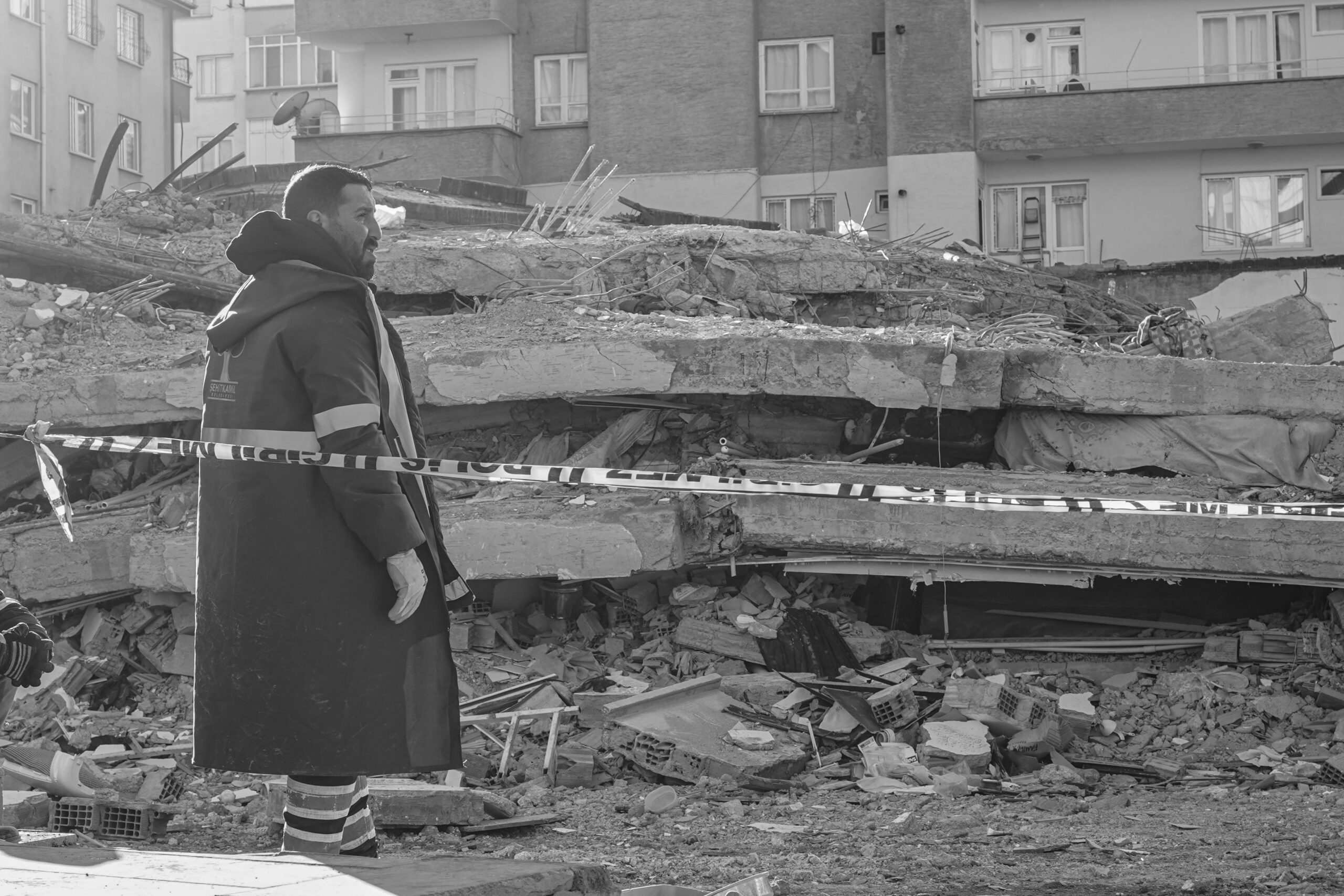
🌅 Navigating Uncertainty With Intentional Awareness
The silent collapse shapes our world whether we acknowledge it or not, but conscious awareness enables more intentional navigation of resulting challenges. Rather than waiting for dramatic collapse to force reactive crisis management, recognizing gradual deterioration allows proactive adaptation and mitigation. This requires developing comfort with uncertainty, accepting that previous assumptions about perpetual progress and reliable systems no longer hold.
Building community bonds and mutual aid networks creates social infrastructure that remains functional when institutional systems falter. These connections provide practical resilience—shared resources, collective problem-solving, emotional support—while also maintaining social cohesion that isolated individuals cannot sustain. Strong communities weather disruptions that fragment atomized populations.
Cultivating wisdom traditions that prioritize long-term flourishing over short-term extraction offers philosophical frameworks for navigating descent. Many indigenous cultures, spiritual practices, and philosophical schools emphasize interconnection, intergenerational responsibility, and harmony with natural systems—values essential for sustainable civilization yet marginalized by dominant cultural narratives prioritizing growth, competition, and exploitation.
The unseen descent continues reshaping our world in ways both profound and subtle, challenging the assumption that progress marches inevitably forward. By recognizing these patterns, understanding their drivers, and responding with intentional adaptation rather than denial, we can navigate this transformation more effectively than those who remain blind to the changes surrounding them. The collapse may be silent, but our response need not be passive. ⚡
