
Anúncios
Throughout history, civilizations have risen to extraordinary heights only to crumble into obscurity. Understanding the hidden mechanisms behind societal collapse remains crucial for our own survival.
🏛️ The Paradox of Progress: When Success Breeds Failure
Advanced societies often contain the seeds of their own destruction within their greatest achievements. The very innovations, wealth, and complexity that elevate a civilization can simultaneously create vulnerabilities that lead to catastrophic decline. This paradox has puzzled historians, archaeologists, and social scientists for generations, yet patterns emerge when we examine the fall of great empires and advanced cultures across time.
Anúncios
From the Romans to the Maya, from Mesopotamian city-states to modern industrial powers, the trajectory follows recognizable patterns. These societies didn’t fail because they were primitive or weak—they failed precisely because they became sophisticated, interconnected, and dependent on systems that proved fragile under stress. The collapse of complex societies represents one of humanity’s most pressing mysteries and warnings.
Resource Depletion: The Silent Killer of Civilizations
Environmental degradation and resource exhaustion have toppled more empires than foreign armies ever could. When societies exploit their natural resources faster than nature can replenish them, they initiate a countdown to collapse that becomes increasingly difficult to reverse.
Anúncios
The Classic Maya civilization flourished for centuries in Central America, building magnificent cities and developing sophisticated mathematics and astronomy. Yet their downfall came partly from environmental mismanagement. Intensive agriculture depleted soil fertility, while deforestation for construction and fuel led to erosion and water scarcity. As agricultural productivity declined, the elaborate social hierarchy that depended on surplus food production began to fracture.
The Environmental Tipping Point
Modern archaeological evidence reveals that many ancient societies crossed environmental thresholds from which they couldn’t recover. Easter Island’s Polynesian inhabitants famously deforested their entire island, eliminating the resources needed for fishing boats, construction, and food production. The resulting societal collapse reduced the population by over 90% and destroyed their complex culture.
Resource depletion creates cascading effects throughout society:
- Agricultural decline reduces food security and population capacity
- Economic stress increases competition for remaining resources
- Social tensions escalate as different groups struggle for survival
- Political instability undermines coordinated responses to crises
- Cultural fragmentation replaces unified social identity
💰 Economic Complexity and Diminishing Returns
As societies become more complex, they require increasing energy and resources simply to maintain existing structures. Anthropologist Joseph Tainter’s research demonstrates that societies experience diminishing returns on complexity—eventually, the cost of maintaining elaborate systems exceeds the benefits they provide.
The Roman Empire exemplified this principle perfectly. At its height, Rome maintained extensive road networks, massive armies, elaborate bureaucracies, and far-flung trade networks. These systems required constant investment in infrastructure, administration, and military defense. As challenges mounted—barbarian invasions, plague, climate instability—the cost of maintaining imperial complexity became unsustainable.
The Debt Trap of Empires
Economic overextension consistently appears in the decline of advanced societies. Governments finance current operations by borrowing against future productivity, creating debt spirals that become mathematically impossible to escape. When economic growth slows or reverses, debt service consumes increasing portions of available resources, leaving less for productive investment or crisis response.
The Spanish Empire’s 16th-century bankruptcy despite enormous silver imports from the Americas demonstrates how even massive resource influx cannot sustain unsustainable spending. Military campaigns, court extravagance, and administrative overhead consumed wealth faster than conquest could replenish it.
🎭 Social Inequality and Internal Fracture
Extreme wealth concentration undermines social cohesion and creates conditions for systemic failure. When elites capture disproportionate shares of societal resources while ordinary people struggle, the social contract weakens and cooperation breaks down.
Research into pre-collapse societies reveals consistent patterns of increasing inequality preceding major disruptions. In ancient Egypt, tomb inscriptions and archaeological evidence show growing disparities between pharaohs, priests, and common people during periods of instability. The Old Kingdom’s collapse around 2200 BCE followed decades of increasing elite consumption while provincial populations faced hardship.
The Erosion of Social Trust
Advanced societies function through elaborate cooperation networks requiring high levels of trust. When people perceive systems as rigged or unfair, they withdraw cooperation, evade obligations, and pursue narrow self-interest. This erosion of social capital accelerates decline by reducing collective action capacity precisely when coordinated responses become most critical.
The French Revolution emerged not simply from poverty but from the combination of economic crisis and perceived injustice. When elites demand sacrifice while exempting themselves, revolutionary conditions develop. Many historical collapses began with elite overreach that triggered lower-class resistance and systemic breakdown.
⚔️ Military Overextension and Security Dilemmas
Great powers often expand beyond sustainable limits, creating security commitments they cannot maintain. Military overextension drains resources from productive investment while creating vulnerabilities that adversaries exploit.
The Soviet Union’s collapse illustrated how military competition can bankrupt even superpowers. Attempting to match American military spending while maintaining lower economic productivity, the USSR allocated unsustainable portions of GDP to defense. This military burden, combined with economic rigidity and political sclerosis, produced systemic failure within decades.
The Imperial Overreach Syndrome
Historian Paul Kennedy documented how great powers consistently decline when military commitments exceed economic capacity to support them. This pattern appears across centuries:
| Empire | Peak Period | Overextension Factor | Collapse Timeline |
|---|---|---|---|
| Roman Empire | 117-180 CE | Frontier defense costs | Gradual 3rd-5th centuries |
| Mongol Empire | 1206-1294 | Impossible territorial scale | Fragmentation by 1350 |
| Spanish Empire | 1500-1600 | European military campaigns | Decline 17th-19th centuries |
| British Empire | 1815-1914 | Global commitments vs. rivals | Dissolution 1945-1970 |
🦠 Disease and Demographic Collapse
Epidemic disease has repeatedly devastated complex societies, particularly when populations concentrate in cities with inadequate sanitation. The interconnectedness that enables trade and cultural exchange also facilitates pathogen transmission, turning civilization’s greatest advantage into a vulnerability.
The Antonine Plague (165-180 CE) killed millions across the Roman Empire, destabilizing an already stressed system. The Black Death (1347-1353) eliminated one-third of Europe’s population, fundamentally restructuring medieval society. The Columbian Exchange brought diseases to the Americas that destroyed up to 90% of indigenous populations, enabling European conquest.
Demographic Transitions and Societal Vulnerability
Population dynamics profoundly influence societal trajectories. Rapid growth can exceed carrying capacity, while sudden decline disrupts economic systems dependent on demographic expansion. Many collapsed societies experienced demographic stress—either overpopulation straining resources or population crashes undermining social complexity.
Contemporary developed societies face different demographic challenges: aging populations, declining birth rates, and pension systems designed for demographic pyramids that no longer exist. These structural imbalances create fiscal pressures and economic stagnation that mirror historical collapse patterns.
🌡️ Climate Change and Environmental Stress
Climate fluctuations have destabilized societies throughout history, yet civilizations often fail to adapt adequately despite warning signs. The collapse of Bronze Age civilizations around 1200 BCE coincided with prolonged drought across the Eastern Mediterranean. Mycenaean Greece, Hittite Anatolia, and numerous Levantine cities failed simultaneously as climate stress exceeded adaptive capacity.
Paleoclimatology reveals that the Maya collapse aligned with severe drought periods between 800-1000 CE. Tree ring data, lake sediments, and cave formations document decades-long droughts that devastated agriculture-dependent populations. Similar climate-collapse correlations appear for Angkor Wat, the Ancestral Puebloans of North America, and many other societies.
The Adaptation Challenge
Societies face fundamental difficulties adapting to environmental change because successful strategies become culturally embedded and resistant to modification. The Norse Greenland colony maintained European farming practices unsuited to Arctic conditions, refusing to adopt Inuit survival strategies. Their cultural rigidity contributed to complete abandonment by the 15th century.
Climate change acts as a threat multiplier, exacerbating existing vulnerabilities. Drought reduces agricultural productivity, triggering food insecurity, economic stress, migration, and conflict—all simultaneously. Societies already weakened by inequality, debt, or political dysfunction prove especially vulnerable to environmental shocks.
🏛️ Political Dysfunction and Governance Failure
Effective governance becomes increasingly difficult as societies grow complex. Decision-making structures optimized for earlier conditions become inadequate for new challenges. Political elites often prioritize short-term advantage over long-term sustainability, while institutional sclerosis prevents necessary reforms.
The late Roman Empire exemplified governance failure as competing generals fought civil wars while barbarian threats intensified. Political energy focused on internal power struggles rather than external challenges or systemic reforms. Similarly, late imperial China’s Qing Dynasty proved unable to modernize adequately, despite recognizing the challenge, because entrenched interests blocked reforms.
The Legitimacy Crisis
When governments lose legitimacy—the belief that authority deserves obedience—compliance becomes coercion-dependent rather than voluntary. This transition dramatically increases governance costs while reducing effectiveness. Collapsed societies typically experienced legitimacy crises where populations stopped believing in institutional authority.
Legitimacy erodes through multiple pathways: corruption, incompetence, injustice, or simply failure to deliver expected services. Once lost, legitimacy proves extremely difficult to restore, creating downward spirals where government weakness breeds further defiance and disorder.
📚 Cultural Rigidity and Innovation Failure
Successful civilizations develop elaborate cultural systems—religious beliefs, social hierarchies, economic practices—that resist change even when circumstances demand adaptation. This cultural conservatism, beneficial during stable periods, becomes catastrophic during crises requiring flexible responses.
The inability to innovate or adopt foreign solutions appears repeatedly in collapse narratives. Societies invest so heavily in existing systems that alternatives become literally unthinkable. Religious authorities, traditional elites, and cultural gatekeepers defend established practices against reform, even as those practices drive society toward failure.
🔮 Lessons for Modern Civilization
Contemporary global civilization exhibits multiple characteristics associated with historical collapses: resource depletion, climate change, extreme inequality, financial instability, political dysfunction, and complex interdependencies. While modern technology and knowledge provide unprecedented adaptive capacity, they also create novel vulnerabilities.
Our interconnected global systems enable rapid wealth creation but also facilitate cascading failures. Financial contagion, pandemic spread, cyberattacks, and supply chain disruptions can propagate worldwide within hours. The 2008 financial crisis and COVID-19 pandemic demonstrated how quickly global systems can destabilize.
The Sustainability Imperative
Unlike historical societies, we possess sophisticated understanding of collapse dynamics and potential mitigation strategies. The question becomes whether knowledge translates into action before critical thresholds are crossed. Sustainability requires fundamental transitions in energy systems, economic structures, governance models, and cultural values—changes that challenge powerful interests and established identities.
History suggests that societies rarely implement necessary reforms until crisis forces change, often too late to prevent severe disruption. Yet historical determinism isn’t absolute—human agency, leadership, and collective action can alter trajectories. The fall of advanced societies reveals patterns but not inevitability.
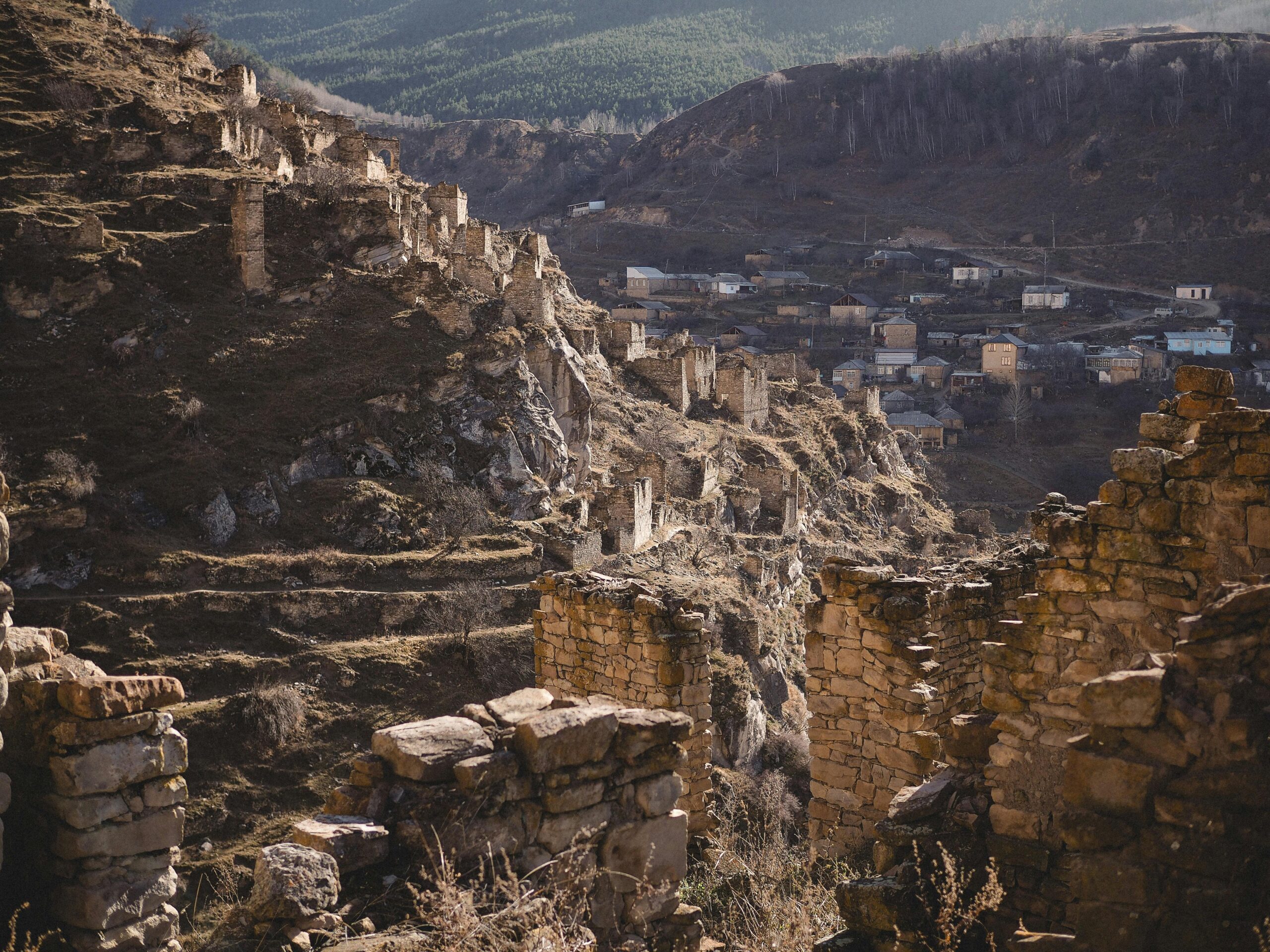
🌍 Navigating Complexity in the 21st Century
The hidden forces behind societal collapse—environmental degradation, economic overextension, inequality, political dysfunction, disease, climate stress, and cultural rigidity—remain active today. Modern civilization’s unprecedented scale and complexity magnify both opportunities and risks. We possess capabilities unimaginable to previous societies, yet face challenges of corresponding magnitude.
Understanding collapse dynamics provides perspective for contemporary challenges. Recognizing warning signs, reducing systemic vulnerabilities, building resilience, maintaining adaptability, and prioritizing long-term sustainability over short-term gain represent rational responses to persistent historical patterns. Whether we prove wiser than our predecessors remains the defining question of our era.
The rise and ruin of advanced societies teaches humility about human achievement’s fragility while offering hope that awareness might inform better choices. Our complex global civilization faces an inflection point where the paths toward sustainable flourishing and catastrophic collapse both remain possible. Which trajectory we follow depends on decisions made in the coming decades—decisions informed, we hope, by the hard-won lessons of history’s fallen empires.
