Anúncios
Humanity stands at a crossroads where our collective knowledge, culture, and history must be preserved for future generations—or risk being lost forever.
We live in an age of unprecedented information abundance, yet paradoxically, we face unprecedented fragility in how we store and transmit knowledge. Digital rot, natural disasters, political instability, and technological obsolescence threaten to erase centuries of human achievement. The question is no longer whether we should create a final archive of humanity’s legacy, but how we can ensure it survives through whatever future awaits our species.
Anúncios
From ancient libraries to modern data centers, civilizations have always recognized the vital importance of preserving knowledge. Today, with technology advancing at breakneck speed and global challenges mounting, the mission to create a comprehensive, durable archive of human knowledge has become more urgent than ever. This is not just about storing information—it’s about safeguarding the very essence of what makes us human.
🏛️ The Historical Imperative: Learning From Lost Libraries
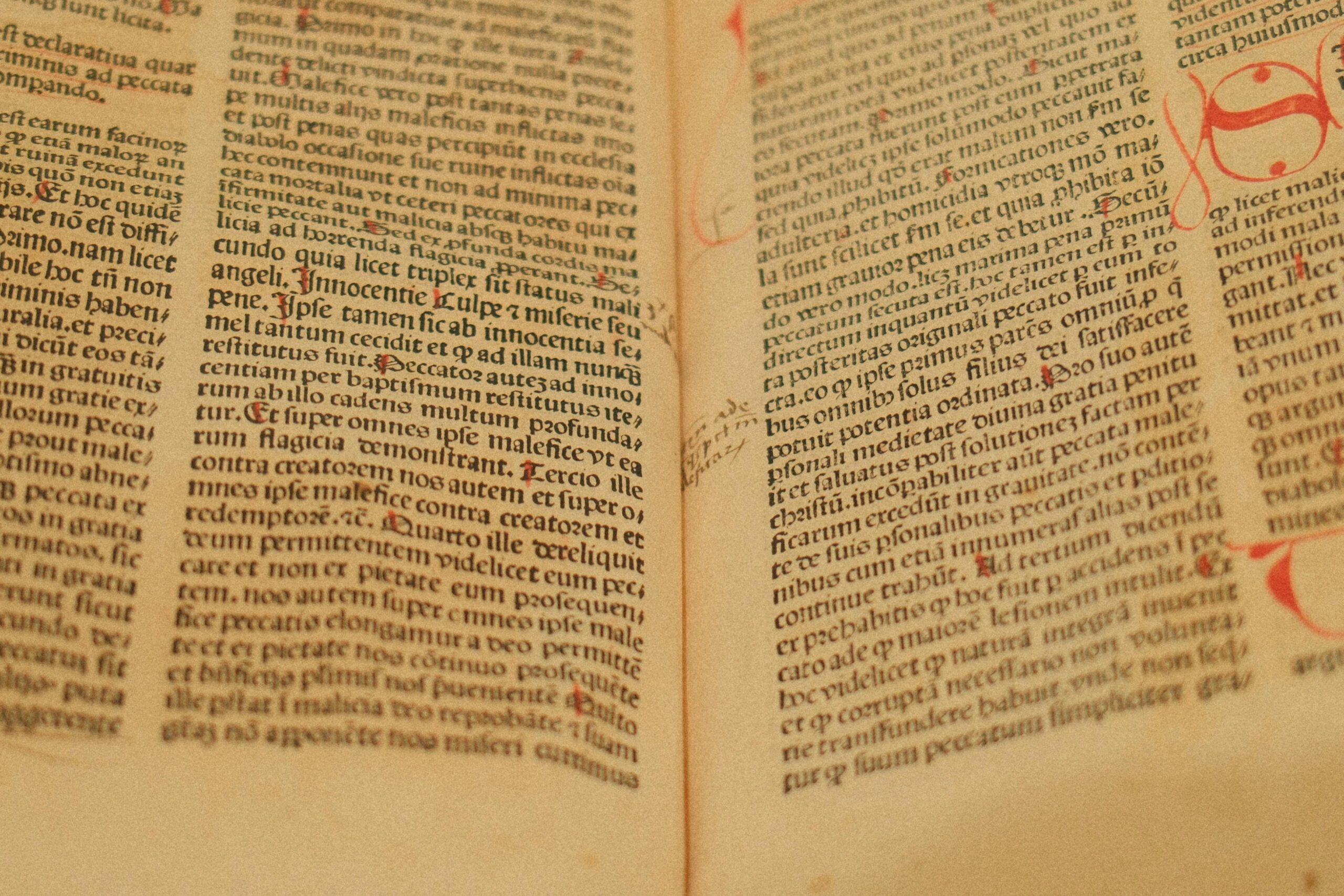
History teaches us harsh lessons about the fragility of knowledge. The Library of Alexandria, once housing over 400,000 scrolls representing the accumulated wisdom of the ancient world, was destroyed—taking with it countless irreplaceable texts. The burning of the Nalanda University library in India burned for three months, destroying millions of manuscripts. The deliberate destruction of cultural heritage sites and libraries in modern conflicts reminds us that knowledge preservation is an ongoing battle.
Anúncios
These catastrophic losses weren’t just about buildings or objects—they represented the erasure of entire intellectual traditions, scientific discoveries, and cultural memories. When knowledge disappears, humanity must reinvent solutions to problems already solved, rediscover principles already understood, and rebuild connections to our past that give context to our present.
The digital age promised to solve these problems through redundancy and accessibility, but it has introduced new vulnerabilities. Digital media degrades faster than many people realize, file formats become obsolete, and the infrastructure required to access digital information is surprisingly fragile. A clay tablet from 4,000 years ago remains readable today, but will we be able to access files created in 1990 in another thirty years?
📚 What Constitutes Humanity’s Essential Legacy?
Creating a final archive requires making difficult decisions about what deserves preservation. The sheer volume of human knowledge and cultural output makes comprehensive archiving practically impossible, yet the criteria for selection must be thoughtfully considered to ensure we don’t inadvertently erase important perspectives or knowledge systems.
Scientific and Technical Knowledge
The foundation of any comprehensive archive must include humanity’s scientific achievements—the fundamental principles of mathematics, physics, chemistry, and biology that underpin our understanding of reality. Medical knowledge that has saved countless lives, agricultural techniques that feed billions, and engineering principles that built our civilization must be preserved in forms that future generations can understand and apply.
But scientific knowledge isn’t just about formulas and theories. The methodology of science itself—the systematic approach to questioning, testing, and refining understanding—represents one of humanity’s most powerful tools for problem-solving and must be carefully documented.
Cultural and Artistic Heritage
Literature, music, visual arts, and performance traditions capture the human experience in ways that pure data cannot. Shakespeare’s plays tell us more about Elizabethan England than many historical documents. Traditional songs preserve linguistic features and social values. Architecture reflects both aesthetic sensibilities and practical adaptations to local environments.
Every culture contributes unique perspectives and knowledge systems that broaden human understanding. Indigenous ecological knowledge, traditional healing practices, oral histories, and spiritual traditions represent millennia of accumulated wisdom that often goes unrecognized by dominant knowledge paradigms.
Language and Communication Systems
Of the approximately 7,000 languages currently spoken, many face extinction within this century. Each language represents a unique way of conceptualizing and describing reality. Preserving linguistic diversity means archiving not just vocabulary and grammar, but the cultural contexts, idioms, and ways of thinking embedded in each language.
The Rosetta Stone provided the key to deciphering Egyptian hieroglyphics. Any archive intended for long-term preservation must include similar linguistic bridges—comprehensive documentation of major languages, translation systems, and conceptual frameworks that could help future interpreters understand archived materials.
💾 Modern Preservation Technologies and Strategies
Creating a truly lasting archive of human knowledge requires combining multiple preservation strategies, each with distinct advantages and limitations. No single technology can guarantee indefinite preservation, making redundancy across different media and storage methods essential.
Digital Storage Solutions
Modern digital storage offers unprecedented capacity and accessibility. The Internet Archive’s Wayback Machine has preserved over 735 billion web pages, creating a digital fossil record of the internet era. Project Gutenberg has digitized over 70,000 public domain books, making literature freely accessible worldwide.
However, digital preservation faces significant challenges: magnetic media degrades within decades, optical discs deteriorate, and storage devices become obsolete. Cloud storage depends on continuous maintenance and energy supply. The solution lies in active digital preservation—continuously migrating data to new formats and storage media while maintaining multiple redundant copies.
Physical Archives and Analog Backups
Despite digital advantages, physical media offers remarkable longevity. Acid-free paper, when properly stored, can last centuries. Microfilm and microfiche provide high-density analog storage with proven durability. The Svalbard Global Seed Vault in Norway demonstrates how carefully designed physical archives can protect vital resources in environmentally stable locations.
Some organizations are developing advanced analog storage specifically designed for extreme longevity. The Long Now Foundation’s Rosetta Project has etched over 1,500 languages onto a nickel disk designed to last thousands of years. HD Rosetta, a ceramic storage medium, can theoretically preserve data for millions of years.
Emerging Preservation Technologies
Cutting-edge technologies promise even more durable storage solutions. DNA data storage can theoretically preserve information for thousands of years in microscopic volumes. Researchers have successfully encoded books, images, and videos into synthetic DNA strands that can be stored and retrieved.
Five-dimensional optical data storage uses lasers to encode information in glass at the molecular level, creating storage that could survive for billions of years at room temperature. Microsoft’s Project Silica has already stored the original Superman movie on a piece of glass roughly the size of a drink coaster.
🌍 Global Initiatives for Knowledge Preservation
Recognizing the importance of preserving human knowledge, numerous organizations and initiatives have emerged worldwide, each contributing to the broader mission of safeguarding our collective legacy.
| Initiative | Focus Area | Key Achievement |
|---|---|---|
| Internet Archive | Digital cultural artifacts | 735+ billion archived web pages |
| Svalbard Seed Vault | Agricultural biodiversity | 1+ million seed varieties preserved |
| UNESCO World Heritage | Cultural and natural sites | 1,154 protected sites worldwide |
| Memory of the World | Documentary heritage | 494 inscribed collections |
| Arctic World Archive | Government and cultural data | Secure storage in Arctic permafrost |
The Arctic World Archive, located in a decommissioned coal mine in Svalbard, Norway, stores data on specially designed film that requires no energy, no migration, and no maintenance. Countries, organizations, and individuals can deposit cultural and governmental records in this secure facility designed to outlast current civilizations.
Wikipedia represents another remarkable preservation effort—a collaborative encyclopedia containing over 60 million articles in 300+ languages, freely accessible and continuously updated. The Wikimedia Foundation maintains regular database dumps and works with memory institutions worldwide to ensure this knowledge remains accessible.
⚠️ The Challenges of Perpetual Preservation
Creating archives is one challenge; ensuring they remain accessible and meaningful over centuries or millennia presents entirely different problems that require consideration beyond technical solutions.
The Obsolescence Problem
Technology evolves rapidly, rendering formats and devices obsolete within years. Eight-track tapes, floppy disks, and LaserDiscs are already unreadable to most people despite being relatively recent technologies. File formats change constantly—how many computers today can open documents created in WordPerfect or Lotus 1-2-3?
Solving this requires either continuously migrating data to current formats—a resource-intensive process vulnerable to organizational failure—or creating self-documenting archives that include instructions for building the devices needed to read them, similar to including a record player needle with the Voyager Golden Records.
The Comprehension Gap
Preserving information means nothing if future generations cannot understand it. Language evolves, context disappears, and cultural frameworks shift. Reading Chaucer’s Middle English is challenging for modern English speakers despite only 600 years of separation. How will people 10,000 years hence interpret our archives?
Creating truly long-term archives requires layered documentation—visual symbols and diagrams that transcend language, comprehensive linguistic keys, and extensive contextual information that explains not just what we preserved, but why and how to interpret it.
Security and Access Balance
Archives must balance accessibility against security. The more accessible information is, the more vulnerable it becomes to destruction, corruption, or censorship. Geographic distribution and multiple copies provide redundancy, but increase management complexity and potential inconsistencies.
Who controls access to archives? Who decides what gets preserved? These questions have profound implications for which perspectives and knowledge systems survive to inform future generations. Ensuring diverse, representative curation requires intentional inclusion of marginalized voices and knowledge traditions.
🔮 Archives for Catastrophic Scenarios
While we hope for continuity, prudent preservation planning must consider catastrophic scenarios—nuclear war, pandemic collapse, climate disasters, or astronomical impacts that could severely disrupt or destroy civilization.
The Bulletin of Atomic Scientists maintains the Doomsday Clock, currently set at 90 seconds to midnight—the closest to catastrophe in the clock’s history. Whether facing existential risks or gradual decline, humanity needs archives that can survive worst-case scenarios and facilitate knowledge recovery.
Decentralized Preservation Networks
Geographic distribution is essential for survival. The LOCKSS (Lots of Copies Keep Stuff Safe) principle underlies many digital preservation efforts. Physical copies should be distributed across geologically stable regions, different climate zones, and politically diverse jurisdictions to minimize the risk of total loss.
Some proposals suggest establishing archives on the Moon or in orbit, protected from terrestrial catastrophes. While technically challenging, extraplanetary archives could serve as ultimate backup systems for Earth-based preservation efforts.
Restart Instructions for Civilization
Beyond preserving existing knowledge, catastrophe-oriented archives should include practical information for rebuilding civilization from varying states of collapse. This includes basic agriculture, metalworking, medicine, and sanitation—knowledge that seems obvious now but could be vital for survivors lacking access to modern infrastructure.
The Manual for Civilization, curated by the Long Now Foundation, identifies 3,500 books that could help restart civilization, covering everything from practical skills to philosophy. Such collections recognize that preserving humanity’s legacy means not just recording what we achieved, but providing tools for future humans to rebuild and advance.
🌟 Digital Commons and Open Access Movements
Preservation is inseparable from access. Knowledge locked behind paywalls, proprietary formats, or restrictive copyrights is knowledge at risk. The open access movement recognizes that humanity’s collective knowledge should be freely available to all people.
Creative Commons licenses enable creators to share work while retaining certain rights. Open-source software ensures critical tools remain accessible even if companies fail. Open educational resources democratize learning materials. These movements aren’t just about current access—they’re about ensuring future generations inherit an accessible knowledge commons rather than encrypted fragments controlled by defunct corporations.
Academic publishers increasingly face pressure to make research publicly accessible, recognizing that publicly-funded research should be publicly available. The growing preprint culture and institutional repositories represent shifts toward more open, preservation-friendly knowledge sharing.
🤝 Personal Contributions to Humanity’s Archive
While large institutions play crucial roles, individuals can meaningfully contribute to preserving humanity’s legacy. Every person holds unique knowledge, experiences, and perspectives worth preserving.
- Document family histories and personal stories before they’re lost—oral histories preserve individual experiences and local contexts often absent from official records
- Support archival organizations through donations, volunteering, or advocacy for library and museum funding
- Choose preservation-friendly formats for personal records—acid-free paper, stable file formats, multiple backup locations
- Contribute to collaborative knowledge projects like Wikipedia, OpenStreetMap, or citizen science initiatives
- Share specialized knowledge through documentation, teaching, or mentoring before skills and understanding disappear
- Advocate for knowledge access by supporting open access, library funding, and digital rights
The stories we share, traditions we maintain, and skills we teach represent living archives that complement formal preservation efforts. Cultural transmission through human connection remains one of our most effective preservation technologies.
🚀 Looking Forward: The Eternal Archive
As we develop increasingly sophisticated preservation technologies and strategies, the dream of creating a truly eternal archive of human knowledge becomes more achievable. Yet technical solutions alone are insufficient—successful long-term preservation requires sustained commitment across generations, adaptive management as circumstances change, and inclusive curation that represents humanity’s full diversity.
The archive of humanity’s legacy isn’t a single vault or database—it’s a living, evolving ecosystem of preservation efforts distributed across institutions, technologies, and geographies. It exists in libraries and data centers, in seed vaults and museum collections, in oral traditions and digital commons, in the knowledge passed from teacher to student and parent to child.
Future generations will judge us not just by what we accomplished, but by what we chose to preserve for them. Will they inherit comprehensive, accessible knowledge that empowers them to understand their past and build their future? Or will they face a dark age, struggling to reconstruct lost understanding from fragmentary remains?
The preservation of humanity’s legacy is not merely a technical challenge or institutional responsibility—it’s a profound moral obligation we hold toward those who will follow us. Every book saved, every language documented, every tradition maintained, every piece of knowledge shared freely represents an act of faith in humanity’s future and a gift to people we will never meet.
The final archive of humanity’s legacy cannot truly be final—it must be living, growing, and accessible. It must evolve with human knowledge while maintaining continuity with our past. It must represent all humanity, not just dominant cultures or perspectives. And it must inspire future generations to continue the work of preservation, adding their own contributions to the ever-expanding record of human achievement, wisdom, and creativity. 🌍✨
