
Anúncios
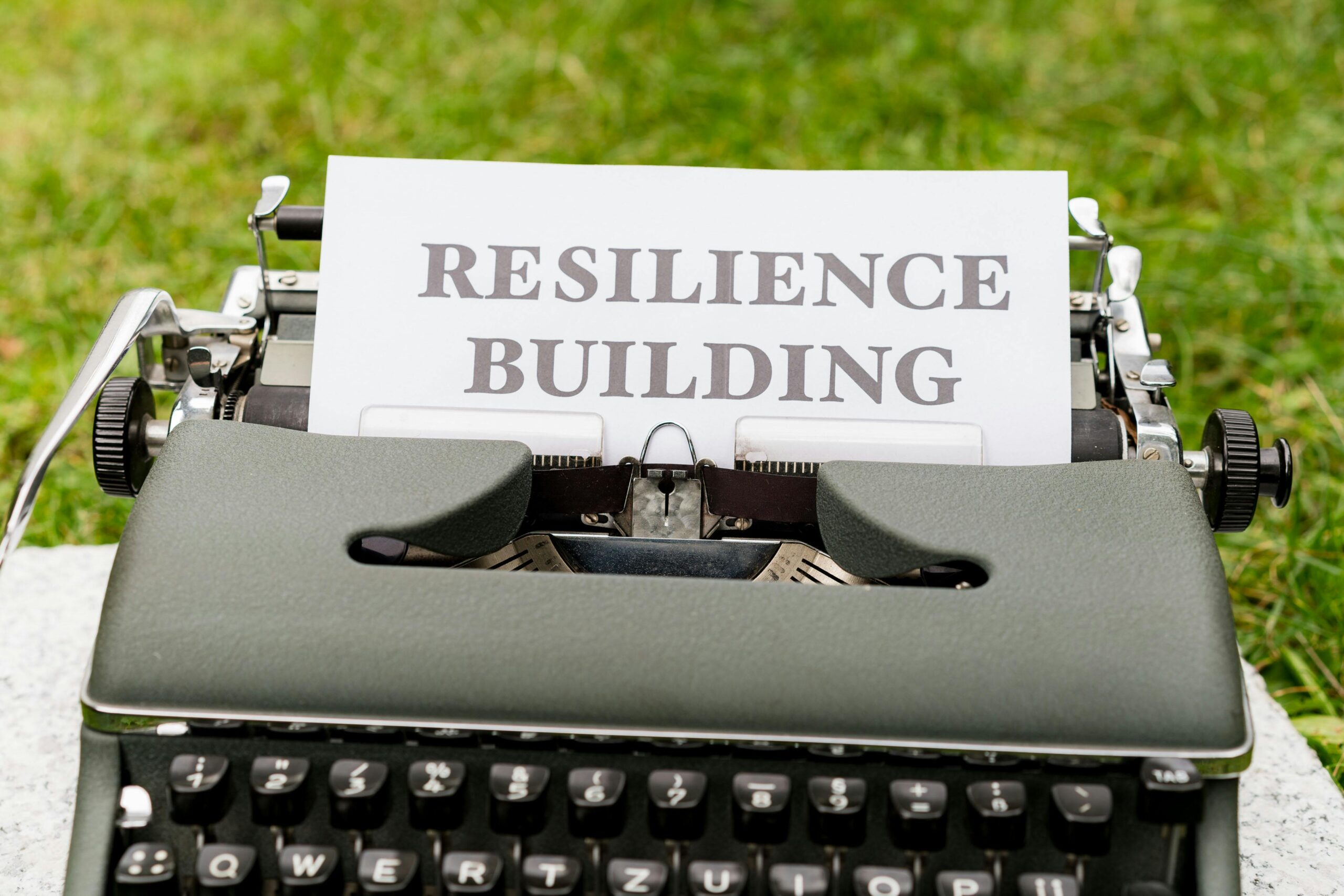
In an era marked by rapid change and uncertainty, the concept of resilience has emerged as a crucial framework for understanding how societies can navigate transformation without descending into chaos.
🌍 Understanding the New Paradigm of Societal Transformation
The traditional narrative of collapse has long been associated with catastrophic failure, societal breakdown, and irreversible damage. However, contemporary research and historical evidence suggest a more nuanced reality: societies can experience significant structural changes and even partial collapses while maintaining essential functions and eventually emerging stronger. This phenomenon, which we might call “adaptive collapse,” represents a fundamental shift in how we understand societal resilience.
Anúncios
The concept challenges our binary thinking about success and failure. Rather than viewing collapse as an endpoint, we can recognize it as a potential transformation point—a moment when unsustainable systems break down to make way for more adaptive structures. This perspective doesn’t minimize the real hardships that accompany such transitions, but it does offer hope and actionable frameworks for managing change.
The Architecture of Resilient Systems
Resilient societies share several fundamental characteristics that enable them to absorb shocks and adapt to changing circumstances. Understanding these features provides a roadmap for building more robust communities and institutions.
Anúncios
Diversity as a Buffer Against Uncertainty
Biological ecosystems teach us that diversity creates stability. The same principle applies to human societies. Economic diversity means that when one sector falters, others can compensate. Cultural diversity brings multiple perspectives to problem-solving. Technological diversity ensures that single points of failure don’t bring entire systems down.
Communities with varied economic activities, multiple food sources, diverse energy systems, and heterogeneous social networks consistently demonstrate greater capacity to weather disruptions. This redundancy, often viewed as inefficient in times of stability, becomes invaluable during periods of stress.
Modularity and Decentralization
Highly centralized systems may operate efficiently under normal conditions, but they become vulnerable when central nodes fail. Modular systems, by contrast, can isolate problems and prevent cascading failures. When power generation is distributed across many smaller facilities rather than concentrated in a few massive plants, localized failures don’t trigger widespread blackouts.
The COVID-19 pandemic demonstrated this principle vividly. Communities with decentralized healthcare systems, local food networks, and distributed decision-making authority often responded more effectively than those dependent on centralized infrastructure.
💡 Historical Lessons in Managed Decline and Renewal
History offers numerous examples of societies that successfully navigated significant downturns without complete collapse. These cases illuminate strategies that contemporary communities can adapt to their own circumstances.
The Dutch Economic Transition
The Netherlands provides a compelling example of managed transformation. After centuries as a global maritime power, the Dutch economy faced fundamental challenges in the 18th and 19th centuries as other nations surpassed their commercial dominance. Rather than clinging desperately to an unsustainable model, Dutch society gradually transitioned toward new economic foundations, including advanced agriculture, financial services, and eventually, industrial production.
This transition wasn’t painless, but it avoided the catastrophic collapse that befell some other former powers. Key factors included maintained investment in education, preservation of institutional knowledge, and willingness to embrace new economic models while leveraging existing strengths.
Cuban Adaptation During the Special Period
When the Soviet Union collapsed in 1991, Cuba lost its primary trading partner virtually overnight. The resulting “Special Period” brought severe economic contraction, food shortages, and energy crises. Yet Cuban society avoided complete breakdown through remarkable adaptations.
Urban agriculture transformed Havana and other cities, with vacant lots and rooftops converted to food production. Transportation systems adapted to drastically reduced fuel availability. Medical care continued despite resource constraints through emphasis on preventive medicine and community health workers. While the Special Period brought genuine hardship, Cuba demonstrated that societies can maintain core functions even when losing access to resources previously considered essential.
Building Adaptive Capacity in Modern Communities 🏘️
Translating historical lessons and theoretical frameworks into practical action requires specific strategies tailored to contemporary contexts. Communities seeking to enhance their resilience can focus on several key areas.
Strengthening Local Economies
Economic resilience begins with reducing dependence on distant, fragile supply chains. This doesn’t mean complete self-sufficiency—an unrealistic goal for most communities—but rather developing robust local economic activity that can provide essential goods and services even when global networks experience disruption.
Local food systems represent a crucial element. Communities investing in farmers’ markets, community gardens, urban agriculture, and regional food processing create buffers against supply chain interruptions. Similarly, local manufacturing capacity for essential items, repair and maintenance services, and local energy generation all contribute to economic resilience.
Investing in Social Infrastructure
Physical infrastructure—roads, utilities, buildings—receives considerable attention, but social infrastructure proves equally critical during times of stress. Strong community organizations, robust civic institutions, and dense social networks enable collective action when individual resources prove insufficient.
During disasters, communities with active neighborhood associations, religious organizations, community centers, and volunteer networks consistently demonstrate superior response capabilities. These social structures facilitate information sharing, mutual aid, and coordinated action that formal emergency services cannot replicate alone.
Preserving and Transmitting Knowledge
Societies navigate transitions more successfully when they maintain broad knowledge bases across generations. Overspecialization creates vulnerabilities; when experts in critical fields are scarce, disruptions affecting those individuals can create knowledge gaps that prove difficult to fill.
Practical skills—food preservation, basic construction, equipment repair, first aid, traditional crafts—represent forms of resilience knowledge that modern societies often undervalue. Educational systems emphasizing diverse practical capabilities alongside specialized professional training create populations better equipped to adapt when circumstances change.
🔄 Psychological and Cultural Dimensions of Resilience
Material preparation alone cannot ensure successful adaptation. The psychological and cultural frameworks through which societies understand change profoundly influence their capacity to navigate it constructively.
Reframing Narratives About Progress and Decline
Modern industrial societies typically embrace progress narratives assuming continuous growth and improvement. When growth stalls or reverses, these narratives become sources of despair rather than useful guides. Societies that cultivate more flexible narratives acknowledging cyclical patterns, natural limits, and the possibility of thriving within constraints may navigate transitions with less psychological distress.
Indigenous cultures and traditional societies often maintain worldviews that accommodate both abundance and scarcity, recognizing that circumstances change while core values and community bonds endure. These perspectives offer valuable models for societies confronting resource constraints or environmental limits.
Cultivating Collective Efficacy
Belief in collective capability to address challenges—what researchers call collective efficacy—strongly predicts community resilience. When people believe their actions matter and that working together produces results, they engage in constructive responses rather than withdrawing into individualistic survival strategies.
Building collective efficacy requires successful experiences of community action. Small-scale projects—neighborhood cleanups, community gardens, local festivals—create foundations for larger collective efforts during crises. Each successful collaborative endeavor strengthens the social trust and organizational capacity that future challenges will require.
Governance Structures That Enable Adaptation 📋
Political and governance systems profoundly influence societal capacity to navigate change. Certain structural features consistently correlate with successful adaptation, while others create obstacles.
Flexible, Responsive Decision-Making
Rigid bureaucracies struggle to respond effectively when circumstances change rapidly. Governance structures incorporating flexibility, experimentation, and rapid feedback loops demonstrate superior adaptive capacity. This doesn’t necessarily mean less government, but rather differently organized governance that can adjust policies based on real-world results.
Participatory decision-making processes, though sometimes slower initially, often produce more sustainable outcomes because they incorporate diverse perspectives and build broader support for difficult changes. During transitions requiring sacrifice or significant behavioral shifts, policies developed through inclusive processes face less resistance than those imposed from above.
Maintaining Essential Public Goods
Even during economic contraction, certain public investments prove crucial for maintaining social stability and enabling eventual recovery. Public health systems, basic education, rule of law, and environmental protections represent foundations that, if allowed to deteriorate, make recovery far more difficult.
Societies that maintain these essential functions during difficult periods position themselves for renewal. Those that allow fundamental institutions to collapse face much longer, harder paths to stability.
🌱 Environmental Resilience and Ecological Wisdom
No discussion of societal resilience can ignore the ecological context within which all human societies exist. Environmental degradation consistently undermines long-term resilience, while societies that maintain healthy ecosystems create buffers against various shocks.
Natural Systems as Resilience Infrastructure
Healthy watersheds, forests, wetlands, and soils provide services that technological systems cannot easily replicate. Water filtration, climate regulation, flood control, pollination, and soil fertility represent fundamental supports for human communities. Societies investing in ecosystem restoration and protection simultaneously invest in their own resilience.
Urban green spaces provide more than aesthetic benefits. They reduce heat island effects, manage stormwater, improve air quality, and offer spaces for community gathering and food production. During crises, these functions prove invaluable.
Circular Economy Principles
Linear economic models—extract, produce, consume, discard—create inherent vulnerabilities through resource dependence and waste accumulation. Circular approaches that emphasize reuse, repair, recycling, and regeneration build resilience by reducing dependence on continuous resource inputs.
Communities developing circular economy infrastructure—repair centers, material exchanges, composting systems, renewable energy—simultaneously address environmental concerns and build economic resilience. These systems continue functioning even when global supply chains experience disruption.
Technology’s Role in Resilient Futures 💻
Technology represents neither salvation nor threat in itself; the crucial question concerns how societies deploy technological capabilities. Certain technological approaches enhance resilience while others create new vulnerabilities.
Appropriate Technology and Local Control
Technologies that communities can understand, maintain, and repair locally prove more resilient than those requiring specialized expertise and distant supply chains. This doesn’t mean rejecting advanced technology, but rather thoughtfully considering trade-offs between efficiency and resilience.
Distributed renewable energy systems, open-source software, modular design, and technologies built for longevity and repairability all enhance community resilience. Technologies creating dependence on proprietary systems, distant experts, or rare materials introduce vulnerabilities.
Information Networks and Knowledge Sharing
Digital communications enable rapid information sharing and coordination impossible in previous eras. Communities facing challenges can learn from others’ experiences, share solutions, and coordinate responses across distance. This connectivity creates opportunities for collective adaptation that earlier societies lacked.
However, dependence on fragile digital infrastructure introduces risks. Resilient communities maintain both digital and analog information systems, ensuring that critical knowledge remains accessible even if electronic networks fail.
The Path Forward: Integrating Resilience Into Daily Life 🚀
Ultimately, resilience isn’t achieved through single dramatic interventions but through countless small decisions and practices woven into daily life. Building truly adaptive societies requires changes at individual, community, and institutional levels.
Individuals contribute by developing diverse skills, maintaining community connections, and supporting local economic systems. Communities build resilience through investments in social infrastructure, local economies, and environmental health. Institutions enable adaptation by maintaining flexibility, protecting essential public goods, and facilitating participatory decision-making.
The transition toward more resilient societies need not wait for crisis. Indeed, changes made during relatively stable periods prove easier and less traumatic than those forced by emergency. Every community garden planted, every local business supported, every skill learned, and every neighborhood connection strengthened represents an investment in collective capacity to weather future storms.
Climate change, resource constraints, economic volatility, and demographic shifts ensure that coming decades will bring significant challenges. However, these challenges need not result in catastrophic collapse. By embracing resilience as a guiding principle—building diversity, maintaining flexibility, strengthening communities, and preserving knowledge—societies can navigate transformation while maintaining the essential functions that enable human flourishing.
The story of societal adaptation need not be one of desperate survival in the ruins of collapsed civilization. Instead, it can be one of intentional transformation: communities consciously choosing to simplify, localize, and adapt in ways that preserve what matters most while releasing what cannot be sustained. This vision of collapse without catastrophe offers not false optimism but realistic hope grounded in historical precedent and practical action.
Resilience ultimately represents a choice—a decision to invest in adaptive capacity rather than hoping disruption never arrives. Societies making that choice today position themselves to thrive tomorrow, whatever changes the future brings. The work begins not with grand plans but with simple actions: planting seeds, learning skills, building relationships, and cultivating the collective wisdom that enables communities to bend without breaking, to adapt without losing their essential character, and to emerge from transitions not merely intact but renewed. 🌟
