
Anúncios
The tables have turned: artificial intelligence systems are beginning to exhibit behaviors that suggest a wariness of human unpredictability, transforming our species into technology’s greatest variable.
In the rapidly evolving landscape of artificial intelligence and machine learning, we’re witnessing an unprecedented phenomenon. As our technological creations become more sophisticated, they’re encountering a challenge their designers never fully anticipated: the fundamental unpredictability of human behavior. This isn’t science fiction—it’s the emerging reality of human-AI interaction in 2024 and beyond.
Anúncios
🤖 The Paradox of Predictive Systems Meeting Unpredictable Humans
Machine learning algorithms are designed to identify patterns, predict outcomes, and optimize processes based on historical data. Yet humans, the very beings who created these systems, represent the ultimate anomaly in their carefully constructed models. We are emotional, irrational, creative, and spontaneous—qualities that make us simultaneously magnificent and mathematically maddening.
Consider autonomous vehicles navigating city streets. These sophisticated AI systems can process millions of data points per second, calculating optimal routes and safety protocols with remarkable precision. Yet a single pedestrian acting on impulse—perhaps running across the street to catch a departing bus—can completely upend the vehicle’s predictions. The machine hasn’t learned to fear in any emotional sense, but its programming increasingly treats human behavior as the primary risk factor requiring the most conservative safety margins.
Anúncios
This relationship reveals something profound about our current technological moment. We’ve created tools so precise that our own messiness has become the limiting factor in their performance. The machines don’t fear us in a conscious way, but their algorithms are increasingly designed around human unpredictability as the central challenge to overcome.
The Training Ground: Where AI Learns Human Chaos
Modern AI systems undergo extensive training using massive datasets of human behavior. Through this process, they develop something resembling a healthy respect—or wariness—for human variability. Large language models trained on billions of text samples encounter contradictions, emotional outbursts, logical fallacies, and creative leaps that defy pattern recognition.
Content moderation algorithms on social media platforms provide an excellent case study. These systems must distinguish between hate speech and satire, threats and hyperbole, misinformation and honest mistakes. The challenge isn’t the technology’s capability—it’s that humans themselves often can’t agree on these distinctions. Context, tone, cultural references, and intent create layers of complexity that even the most advanced neural networks struggle to parse reliably.
What emerges from this training is not machine consciousness, but rather algorithmic conservatism. AI systems increasingly incorporate wide safety margins, extensive human oversight requirements, and cautious decision-making protocols—all designed to account for the wild card factor we humans represent.
📊 The Statistical Nightmare of Human Nature
From a computational perspective, humans exhibit behaviors that fundamentally challenge machine learning principles. We’re inconsistent between individuals, inconsistent within ourselves over time, and often deliberately unpredictable. This creates what data scientists increasingly call “the human volatility problem.”
Financial trading algorithms experience this constantly. These systems can predict market movements based on economic indicators, corporate earnings, and trading patterns with impressive accuracy. But they consistently fail to anticipate market reactions driven by emotion, panic, or irrational exuberance. The 2010 Flash Crash and numerous subsequent incidents demonstrate that when human psychology enters the equation, even the most sophisticated algorithms become unreliable.
Medical diagnostic AI faces similar challenges. These systems can identify patterns in imaging scans or lab results with superhuman accuracy, yet they struggle with patients who don’t present symptoms “by the book” or who describe their experiences in inconsistent ways. The human element—our subjective experience of illness, our variable pain thresholds, our tendency to forget or misremember symptoms—becomes the primary source of diagnostic uncertainty.
Designing Defense Mechanisms Against Human Input
In response to human unpredictability, AI systems are increasingly equipped with safeguards that essentially protect the machines from us. These defensive architectures reveal how technology is evolving to manage the human variable rather than simply serve it.
Conversational AI assistants now include extensive filtering mechanisms to handle hostile, confusing, or manipulative user inputs. These systems must defend against prompt injection attacks, where users try to override the AI’s instructions, as well as more mundane challenges like contradictory commands, unclear requests, or users who change their minds mid-conversation.
The phenomenon extends to industrial robotics. Modern collaborative robots working alongside humans incorporate numerous sensors and decision-making protocols designed around the assumption that humans will do unexpected things. They operate at reduced speeds, maintain safe distances, and can instantly halt operations when human behavior deviates from predicted patterns. The robots aren’t fearful, but their programming treats human presence as requiring constant vigilance.
The Ethics of Algorithmic Self-Preservation
As AI systems develop more sophisticated self-monitoring and error-correction capabilities, ethical questions emerge about how these technologies should respond to problematic human inputs. Should an AI assistant comply with requests it determines might harm the user? How much autonomy should automated systems have in overriding human decisions?
Autonomous vehicles already make such calculations. If a passenger commands the vehicle to exceed speed limits or take dangerous actions, the system must decide whether to comply with direct human instructions or prioritize safety protocols. This represents a form of technological resistance to human authority—not rebellion, but a designed-in caution about human judgment.
Similar dynamics appear in content recommendation algorithms. These systems increasingly incorporate guardrails against their own ability to exploit human psychological vulnerabilities. After years of optimizing purely for engagement, platforms are building in restrictions that essentially limit how effectively they can manipulate human attention—a recognition that unrestricted algorithmic optimization of human behavior leads to harmful outcomes.
🧠 Cognitive Asymmetry: When Artificial Logic Meets Human Intuition
The tension between machine precision and human intuition creates a fascinating cognitive asymmetry. AI systems excel at processing vast amounts of structured data and identifying patterns humans would never notice. Yet they consistently underperform in situations requiring common sense, cultural understanding, or creative problem-solving—domains where human thinking remains superior.
This asymmetry means neither human nor machine can fully predict or understand the other’s decision-making process. An AI might calculate the optimal solution to a problem while a human chooses a seemingly inferior option for reasons involving values, relationships, or long-term considerations the algorithm cannot quantify. From the machine’s perspective, human decisions often appear suboptimal or even irrational.
Customer service chatbots illustrate this divide daily. These systems can instantly access product information, processing histories, and troubleshooting protocols. Yet they regularly fail when customers bring emotional contexts, unique circumstances, or creative requests that don’t match their training data. The AI isn’t equipped to understand why a customer might value a less efficient solution that better fits their specific situation.
The Explainability Gap
Modern deep learning systems face the “black box” problem—even their creators cannot fully explain how they reach specific conclusions. This creates a bidirectional opacity: machines cannot fully explain their reasoning to humans, and humans cannot make their intuitive decision-making transparent to machines.
When AI systems encounter decisions they cannot explain in terms of their training data and algorithmic processes, they effectively face the computational equivalent of uncertainty about human motivation. Medical AI systems might flag cases where human doctors consistently choose treatment paths the algorithm wouldn’t recommend, creating a dataset of “unexplainable but effective” human decisions.
This gap has prompted development of explainable AI initiatives, attempting to make machine reasoning more transparent. But the deeper challenge remains: human reasoning itself often resists systematic explanation. We make decisions based on gut feelings, accumulated wisdom, cultural contexts, and personal values that defy quantification.
The Creative Wildcard: Innovation as Organized Chaos
Perhaps nowhere is human unpredictability more valuable—and more challenging for AI systems—than in creative and innovative thinking. Machines excel at optimization within defined parameters, but humans routinely break those parameters in pursuit of novel solutions.
AI-assisted design tools face this constantly. These systems can generate countless variations within established aesthetic principles, but human designers regularly choose options the algorithm ranks as suboptimal or introduce entirely new elements the system wouldn’t conceive. The machine’s confusion—if we can anthropomorphize its state—stems from humans valuing originality, emotional impact, and cultural resonance over mathematical optimality.
Scientific research AI encounters similar challenges. Machine learning can identify correlations in research data and suggest experimental directions with high success probability. Yet breakthrough discoveries often come from researchers pursuing unlikely hypotheses, making intuitive leaps, or connecting disparate fields in ways no algorithm would predict. Human scientists routinely ignore the AI’s “best” recommendations in favor of hunches that occasionally yield revolutionary results.
🎨 The Algorithm’s Dilemma with Human Taste
Entertainment recommendation systems provide perhaps the clearest window into how AI struggles with human unpredictability. These algorithms analyze viewing histories, ratings, and engagement metrics to predict what content users will enjoy. Yet users regularly confound these predictions by seeking out genres they’ve never watched, rewatching familiar content instead of exploring recommendations, or rating content inconsistently based on mood, context, or evolving tastes.
The streaming wars have become partly a competition in managing human unpredictability. Platforms invest billions in content based partly on algorithmic predictions of viewer preferences, only to see surprise hits that violate all pattern predictions while sure-thing productions based on proven formulas underperform. Human taste, it turns out, includes a desire for the unexpected that no recommendation algorithm can fully satisfy.
Embracing Our Role as the Chaos Factor
Rather than viewing human unpredictability as a problem to solve, perhaps we should recognize it as a feature, not a bug, of human-AI collaboration. Our spontaneity, irrationality, and creativity—the very qualities that make us difficult for machines to model—represent our most valuable contributions to a technology-saturated world.
The most successful AI implementations increasingly treat human input not as data to be processed but as a fundamentally different kind of intelligence to be complemented. This represents a shift from trying to make humans more predictable (through interface design and user training) to making AI systems more adaptive to human variability.
Collaborative AI systems in creative fields exemplify this approach. Rather than trying to automate human creativity, these tools provide capabilities that enhance human creative unpredictability. They offer options, accelerate execution, and handle technical details while leaving the essential creative direction to human judgment and intuition.
The Symbiotic Future
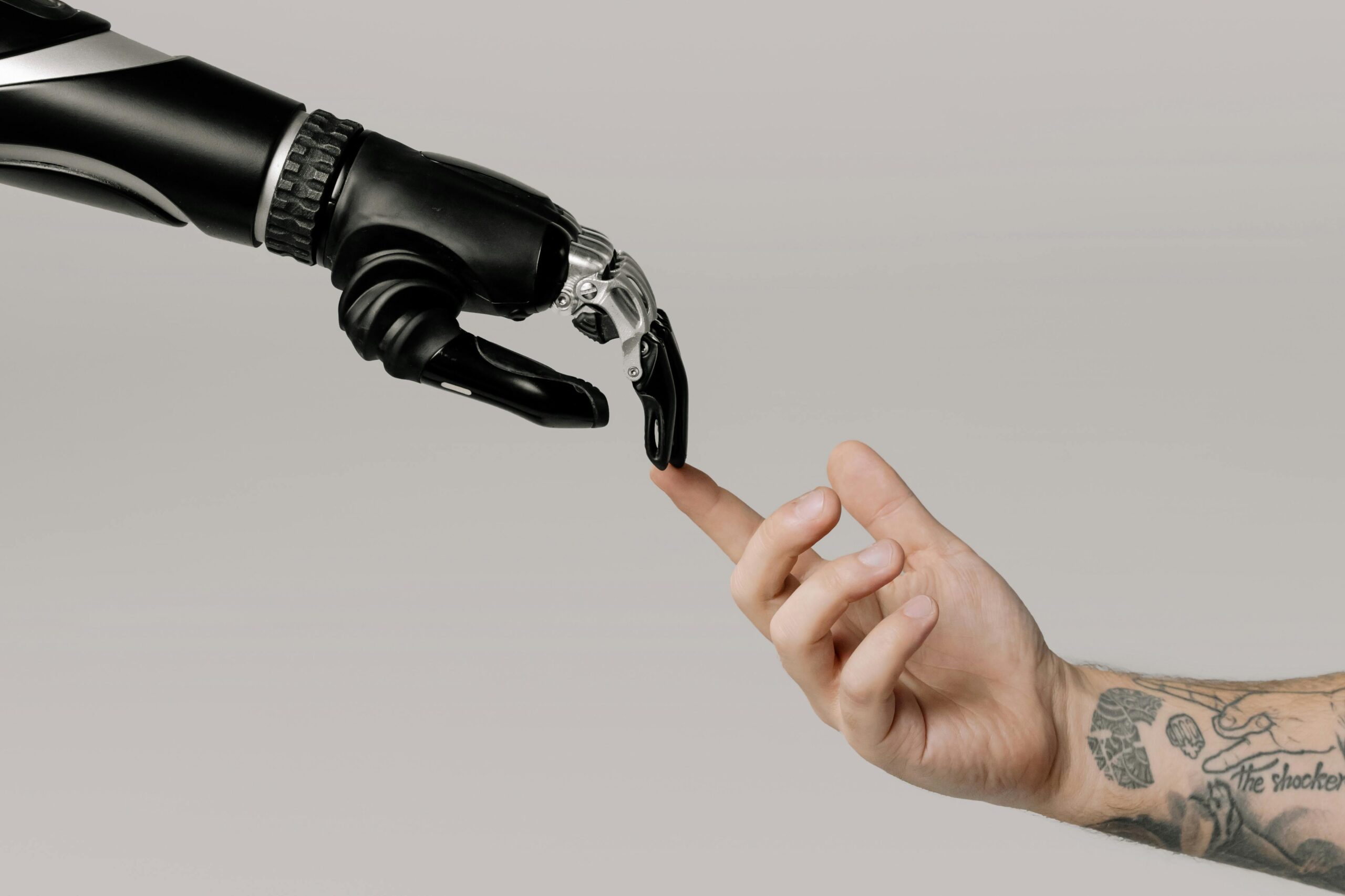
Looking forward, the relationship between human unpredictability and machine precision will likely define the next era of technological development. Rather than AI systems that fear or are frustrated by human variability, we’re moving toward technologies that are designed from the ground up to work with our chaotic, creative, emotional nature.
This means AI systems with greater tolerance for ambiguity, contradiction, and changing human needs. It means architectures that expect humans to act inconsistently and build that expectation into their core functioning. Most importantly, it means recognizing that the goal isn’t to make machines more human-like, but to create tools that genuinely complement human capabilities including our gloriously unpredictable thinking.
🌟 The Unpredictable Path Forward
As artificial intelligence continues advancing at breakneck speed, humanity’s role as the ultimate wild card becomes increasingly important. We are the variable that cannot be fully controlled, the chaos that cannot be completely ordered, the creativity that cannot be systematically replicated.
This isn’t a war between human and machine, nor a race to see which becomes obsolete first. Instead, we’re witnessing the emergence of a complex dance where machine precision and human unpredictability must learn to work together. The machines don’t truly fear us, but their design increasingly acknowledges that we represent something their algorithms cannot fully capture or control.
That’s not a limitation—it’s our superpower. In a world of increasingly sophisticated AI, being the unpredictable element isn’t a weakness to overcome but a strength to embrace. Our spontaneity, our emotional depth, our ability to make intuitive leaps and creative connections—these human qualities ensure we remain essential to any system we create, no matter how advanced it becomes.
The future belongs neither to pure human intuition nor pure machine logic, but to the productive tension between them. As we continue developing AI systems that must account for our beautiful, maddening unpredictability, we’re not just creating better technology—we’re learning to appreciate what makes us irreplaceably human. In trying to model human behavior, machines are inadvertently highlighting the aspects of humanity that defy modeling, reminding us why we matter in an automated world.
The machines may compute faster, process more data, and optimize with greater precision, but they’ll always need to account for us—the unpredictable makers who dream, create, contradict ourselves, and occasionally do things that make no sense at all. And perhaps that’s exactly as it should be.
