
Anúncios
Throughout history, humanity’s greatest achievements have sometimes sown the seeds of catastrophic collapse, proving that innovation without foresight can become civilization’s silent executioner.
🏛️ The Paradox of Progress: When Solutions Become Problems
The rise and fall of civilizations presents one of history’s most compelling ironies. While we often celebrate technological advancement and societal complexity as markers of human achievement, the archaeological record tells a more sobering story. Many of the world’s most sophisticated societies engineered their own demise not through weakness or backwardness, but through the very innovations that initially propelled them to greatness.
Anúncios
This phenomenon, which we might call “progress backfire,” occurs when civilizations become victims of their own success. The sophisticated irrigation systems, architectural marvels, and resource extraction methods that enabled populations to flourish eventually created conditions that made collapse inevitable. Understanding these historical patterns offers crucial insights for our modern world, which faces similar challenges on an unprecedented global scale.
The Ancient Maya: Victims of Agricultural Innovation
The Classic Maya civilization stands as perhaps the most striking example of innovation-driven collapse. Between 250 and 900 CE, the Maya developed one of the most sophisticated civilizations in pre-Columbian America, with advanced mathematics, astronomy, and architecture that still astounds modern observers.
Anúncios
The Maya’s agricultural innovations allowed them to support dense populations in the challenging environment of the Yucatan Peninsula. They developed intensive farming techniques including terracing, raised fields, and complex water management systems. Their success in food production enabled the construction of massive ceremonial centers and supported a complex social hierarchy of priests, nobles, and craftspeople.
The Deforestation Death Spiral
However, these same agricultural innovations required constant expansion. As populations grew, the Maya cleared increasingly more forest for farmland and to produce lime plaster for their monumental buildings. One estimate suggests that producing enough plaster for a single temple required burning wood equivalent to clearing 80 hectares of forest.
This deforestation triggered a cascade of environmental problems:
- Soil erosion reduced agricultural productivity
- Altered rainfall patterns created drought conditions
- Loss of forest resources eliminated backup food sources
- Reduced biodiversity weakened ecosystem resilience
- Increased competition for dwindling resources sparked warfare
By the 9th century, the southern Maya lowlands had been largely abandoned. The very agricultural innovations that allowed the Maya to thrive in a challenging environment had fundamentally altered that environment in ways that made their continued existence impossible.
Rome’s Infrastructure Trap: Too Big to Sustain
The Roman Empire built perhaps history’s most impressive infrastructure network, with over 250,000 miles of roads connecting territories from Britain to North Africa. Roman aqueducts, some still functioning today, supplied cities with unprecedented amounts of fresh water. Public baths, heated floors, and sophisticated sewage systems provided urban amenities unmatched until modern times.
This infrastructure enabled trade, military mobility, and urbanization at scales never before achieved. Rome itself grew to over one million inhabitants, supported by grain shipments from Egypt and North Africa. The empire’s engineering prowess became synonymous with civilization itself.
The Maintenance Nightmare Nobody Anticipated 🏗️
Yet this magnificent infrastructure created a trap. The systems required constant maintenance and enormous resources to function. As the empire expanded, the costs of maintaining roads, aqueducts, fortifications, and administrative structures grew exponentially. Each new conquest initially brought wealth but ultimately added to the maintenance burden.
The infrastructure paradox became apparent during the 3rd century crisis. Economic instability made it difficult to fund maintenance, causing roads to deteriorate, aqueducts to fail, and defensive walls to crumble. Cities that had become dependent on long-distance food supplies faced starvation when supply chains broke down. The very infrastructure that had enabled Rome’s greatness became an impossible burden during times of stress.
When barbarian invasions increased pressure on the empire, Rome lacked the resources to maintain both its vast infrastructure and adequate defense. The empire had become too complex and expensive to sustain, a victim of its own engineering success.
Easter Island: Innovation Without Limits
Few cautionary tales resonate as powerfully as that of Easter Island, known to its inhabitants as Rapa Nui. When Polynesians arrived around 1200 CE, they found an isolated island covered in palm forests. Within a few centuries, they had developed a unique culture famous for its massive stone statues, or moai.
The creation and transportation of these moai represented remarkable engineering innovation. The islanders developed sophisticated techniques for carving, moving, and erecting statues weighing up to 80 tons. At the height of their civilization, nearly 900 moai dotted the island, testaments to human ingenuity and organizational capacity.
The Resource Exhaustion Timeline
But creating and moving the moai required enormous quantities of timber. Archaeological evidence reveals the tragic progression:
- Trees were used as rollers to transport statues
- Wood was needed for construction, fishing boats, and fuel
- Deforestation accelerated as statue production intensified
- By 1600, the island was essentially treeless
- Without boats, fishing became impossible
- Soil erosion reduced agricultural yields
- Population crashed from perhaps 15,000 to just 2,000-3,000
When Europeans arrived in 1722, they found an impoverished population on a barren island littered with abandoned statues. The Easter Islanders had literally consumed their environment in service of their cultural achievements, unable to recognize or unwilling to acknowledge the unsustainability of their practices until it was too late.
⚠️ The Anasazi: When Climate Meets Overreach
The Ancestral Puebloans, commonly called the Anasazi, built one of North America’s most sophisticated pre-Columbian civilizations in the challenging environment of the American Southwest. Their architectural achievements, particularly the cliff dwellings at Mesa Verde and the great houses of Chaco Canyon, demonstrate remarkable engineering and social organization.
Between 900 and 1150 CE, the Chacoan civilization flourished, with a road network connecting outlying communities to the central canyon. They developed sophisticated irrigation systems and constructed massive multi-story buildings requiring hundreds of thousands of timbers transported from forests up to 50 miles away.
The Vulnerability of Specialization
The Chacoans’ success depended on intensive agriculture in a marginal environment. They built elaborate irrigation canals to maximize productivity from irregular rainfall. Their society became increasingly complex and specialized, with distinct social classes and long-distance trade networks bringing exotic goods like macaw feathers and cacao from Mexico.
This specialization created vulnerabilities. When a severe drought struck in the mid-12th century, the inflexible agricultural system couldn’t adapt. The society had become too specialized and too dependent on consistent environmental conditions. Unlike their ancestors who had practiced diverse subsistence strategies, the Chacoans had committed fully to intensive agriculture in a location that couldn’t sustain it during climatic stress.
By 1300, the major Anasazi centers had been abandoned. Their innovations in architecture, irrigation, and social organization had allowed temporary flourishing but created a society too specialized and inflexible to survive environmental challenges.
The Common Threads: Patterns of Self-Inflicted Collapse
Examining these civilizational collapses reveals recurring patterns in how innovation can backfire. While each society faced unique circumstances, several common factors emerge that transformed progress into peril.
The Success Trap
Initial innovations solve immediate problems and enable population growth and increased complexity. This success creates positive feedback loops where societies invest more heavily in the strategies that brought initial prosperity. However, these same strategies often have hidden costs or resource requirements that become unsustainable as scale increases.
Environmental Blindness 🌍
Societies become so invested in their successful strategies that they fail to recognize accumulating environmental damage until it’s too late. The gradual nature of environmental degradation makes it easy to ignore or attribute problems to other causes. By the time the damage becomes undeniable, the society often lacks the resources or flexibility to change course.
The Complexity Curse
As societies become more sophisticated, they require more resources simply to maintain existing infrastructure and institutions. This creates a situation where an increasing share of societal resources must be devoted to maintenance rather than productive activities. During crises, these complex societies often lack the flexibility to adapt because so many systems are interdependent.
Ignoring Carrying Capacity
Innovation temporarily raises the carrying capacity of environments, allowing larger populations. However, societies tend to expand to meet this new capacity rather than creating buffers for difficult times. When environmental conditions change or resources become depleted, populations have grown far beyond what the environment can sustainably support.
Modern Echoes: Are We Repeating Ancient Mistakes?
The patterns that doomed ancient civilizations bear uncomfortable similarities to challenges facing modern society. While our technological capabilities far exceed those of past civilizations, the fundamental dynamics of innovation-driven overreach remain relevant.
Consider modern agriculture, which has increased food production through intensive use of irrigation, fertilizers, and pesticides. Like the Maya, we’ve created farming systems that produce abundantly in the short term while depleting soil, groundwater, and ecosystem health. Global food production now depends on practices that are fundamentally unsustainable over the long term.
The Infrastructure Parallel
Modern developed nations face infrastructure challenges reminiscent of late Rome. The United States alone has trillions of dollars in deferred infrastructure maintenance. The same pattern emerges: initial infrastructure investment enables growth and prosperity, but maintaining and upgrading these systems requires resources that societies struggle to allocate, especially during economic stress.
Complexity and Fragility
Our globalized economy represents perhaps the most complex system ever created. While this complexity enables unprecedented prosperity, it also creates fragility. The COVID-19 pandemic revealed how disruptions in one part of an interconnected system can cascade globally. Like the specialized Anasazi society, our highly optimized global supply chains lack resilience when faced with unexpected shocks.
💡 Lessons for Sustainable Progress
Understanding how past civilizations engineered their own downfall through innovation offers crucial lessons for navigating our own challenges. The goal isn’t to reject innovation but to pursue progress more thoughtfully.
Building Resilience Over Efficiency
Modern society tends to optimize for efficiency, creating systems with minimal redundancy. However, past collapses suggest that resilience—the ability to withstand shocks—matters more for long-term survival than short-term efficiency. This means maintaining diversity in food systems, energy sources, and economic structures rather than putting all resources into the single most efficient option.
Respecting Environmental Limits
Every past civilization that collapsed through overreach failed to respect or recognize environmental limits. Modern society must acknowledge that infinite growth on a finite planet is impossible. Innovation should focus on operating sustainably within planetary boundaries rather than continuously pushing those boundaries.
Long-Term Thinking
Ancient societies often made decisions based on immediate benefits without considering long-term consequences. Modern challenges like climate change require thinking in terms of generations rather than election cycles or quarterly profits. Institutional structures need to facilitate long-term planning even when benefits won’t materialize for decades.
Adaptive Capacity
The most resilient societies in history were those that maintained flexibility and diverse strategies rather than committing entirely to single approaches. Modern innovation should preserve adaptive capacity, maintaining options rather than locking societies into irreversible paths.
🔮 Avoiding the Innovation Trap
The challenge for contemporary civilization is to embrace innovation while avoiding the traps that ensnared our predecessors. This requires conscious effort to ensure that technological progress serves long-term sustainability rather than short-term gains that compromise future viability.
We must develop metrics that measure genuine progress toward sustainability rather than simply growth in consumption or GDP. Innovation should be evaluated not just on immediate benefits but on long-term consequences for environmental systems and social stability.
Perhaps most importantly, we need humility about our capabilities and knowledge. Every collapsed civilization believed its innovations had solved fundamental problems, only to discover that they had merely postponed and amplified them. Recognizing that our current solutions may have hidden costs or unintended consequences is essential for avoiding similar fates.
The Wisdom of Looking Backward to Move Forward
The archaeological record of civilizational collapse provides a sobering counterpoint to narratives of inevitable progress. The Maya, Romans, Easter Islanders, and Anasazi all possessed sophisticated technologies and complex societies that eventually contributed to their downfall. Their experiences demonstrate that innovation alone doesn’t guarantee survival—in fact, poorly conceived progress can accelerate collapse.
Yet these cautionary tales need not lead to pessimism or rejection of progress. Instead, they offer invaluable lessons about the relationship between innovation, environment, and sustainability. By understanding how past societies engineered their own downfall, we can make wiser choices about which innovations to pursue and how to implement them responsibly.
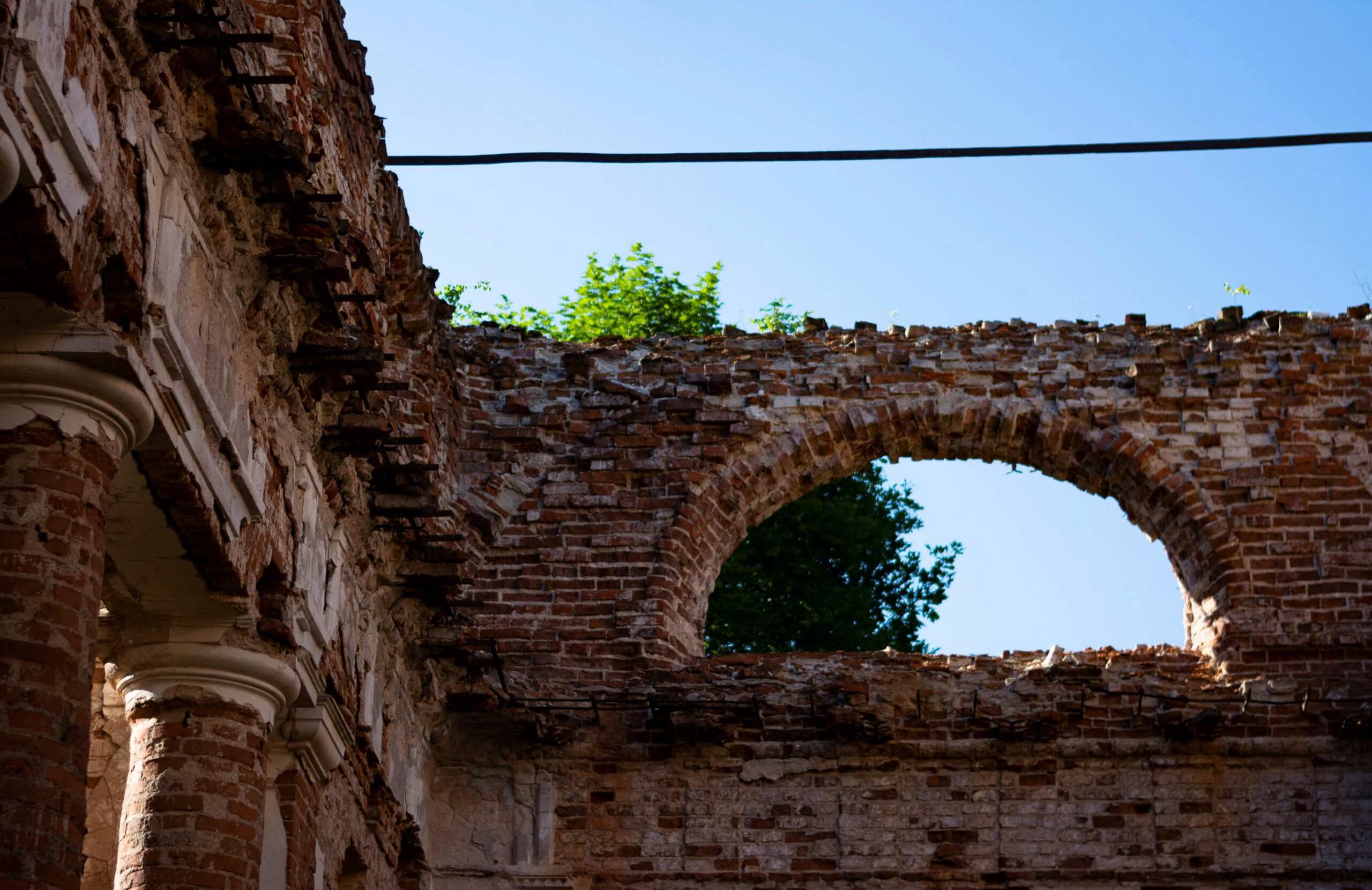
The question facing modern civilization isn’t whether to innovate but how to innovate in ways that enhance rather than undermine long-term sustainability. The ruins of past civilizations stand as monuments to human ingenuity and ambition, but also as warnings about the dangers of unconstrained progress. Whether we heed these warnings may determine whether future archaeologists study our own civilization’s ruins or celebrate our wisdom in choosing a different path.
History suggests that societies rarely collapse due to lack of innovation or insufficient technology. More often, they fall victim to the unintended consequences of their own cleverness, having created systems too complex to maintain, too specialized to adapt, or too resource-intensive to sustain. The real challenge isn’t developing new capabilities but exercising wisdom and restraint in how we deploy them—a lesson as relevant today as it was for the ancient builders of temple pyramids, aqueducts, and stone monuments on remote islands.
